"Warthog!"
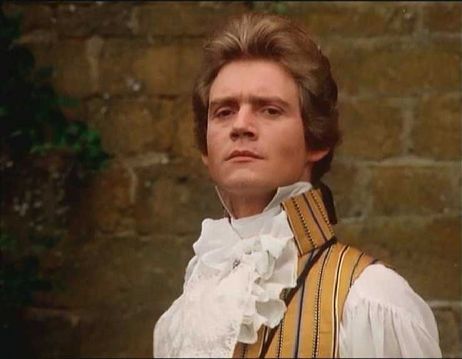
That's the word my sister Anne spits out every time John Willoughby, Esquire, shows his face on the screen during
Sense and Sensibility. Maybe it's not the most mature way of describing his character, but it does seem to fit. Charisma, gallantry and good looks are all very well, but when a person is so despicable, those little insignificant details are trodden underfoot.
My sister and I have very strong opinions about Jane Austen's villains. No, actually we have just one opinion. We hate them. Henry Crawford, John Willoughby, George Wickham, William Elliot, Philip Elton and John Thorpe are all universally disliked around here.
Unlike Queen Victoria, we are
much amused by the fact that Jane Austen apparently did not like gentlemen whose names began with W (Captain Wentworth excepted).
Willoughby,
Wickham,
William Elliot... we sometimes consider starting a fan web site called
www.janeaustenvillains.com.
You are supposed to be laughing now.
Oh, very well, have it your own way. The imaginary web site is not the point of my post. Rather, I wish to talk about John Willoughby and Tom Lefroy. Specifically, I wish to tell you that I believe John Willoughby's character to be modeled after Tom Lefroy.
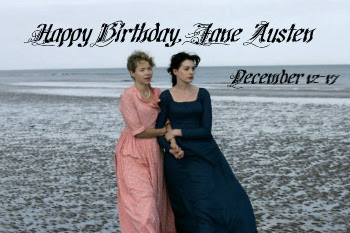
Now before you rise up in wrath and throw your Becoming Jane DVDs at me, let me say that I have duly read
Miss Laurie's post on Tom Lefroy with great interest, and I have nothing against Tom Lefroy. I do not mean to slight his character in this post, nor to slight Miss Austen's (or imply that she was bitter). I am simply Making a Well-Informed Observation.
Jane Austen, as I mentioned in a previous post, was an excellent--nay, amazing--writer who drew from her own experiences, from real life, to write her novels. Is it, therefore, "incontheivable" that she would base one of her villains on someone in real life? Think for a moment, if you will, on the parallels between the two.
From what little we know of Jane's brief acquaintance with Tom Lefroy, we see that he was in the Steventon area visiting a wealthy Aunt. Point number one. I call to your attention Willoughby's rich relation Mrs. Smith, owner of Allenham.
Second point: we see Tom Lefroy as a mysterious, rather dashing personage, with whom Jane might just have fallen in love. If she did indeed develop romantic feelings for him, it happened over a very short period of time. Do recall Marianne's almost instantaneous affection for Willoughby when he rescued her after the ankle incident.
Third point: scandalous behavior on the part of both couples. Marianne and Willoughby raced around on horseback, coolly toured Allenham despite the lady of the house's absence and danced with no one but each other at gatherings. Jane and Tom danced and sat exclusively together, perhaps shocking their friends with their literary conversations about the "horrid" novel
Tom Jones.
Fourth point: both young men had to suddenly go away, Willoughby to London and Tom... well, I'm not sure where Tom went, but presumably back to college. Marianne was left heartbroken, while the more self-controlled Jane wrote lightly and brightly to her sister Cassandra of Tom's departure.
Marianne, we remember, was quite sure that Willoughby would propose to her before he went away. Jane wrote to Cassandra that she didn't care a sixpence for Tom Lefroy, but that if he proposed to her she would accept, if he were to get rid of his ugly white morning coat. (Jeeves, anyone?)
Then came the time of wondering: would she ever hear from him again? Marianne wrote effusive "notes" as she visited Mrs Jennings in London; Jane, it appears, laughed the whole thing off and started to write Pride and Prejudice. We know that Cassandra Austen burnt many of Jane's more personal letters after Jane's death--could there have been something in those letters to divulge her real feelings? Speculation, speculation.
But then the sad part. Willoughby, the rogue, married Miss Grey for her 20,000 pounds, while Tom was wed to a woman named Mary Paul (whose family situation I know nothing of). I don't know if Tom married for money, but from what I've read of him it seems unlikely. Willoughby, of course... well, we know his back story.
Here lies the biggest difference, however. Marianne mourned, wept and refused even olives in her distress. Jane, I think, let the whole matter drop, reconciled herself to spinsterhood and went on to write the best British literature of the nineteenth century. Marianne ended up happy with Colonel Brandon... maybe because Jane wanted a fairy-tale ending, and knew that the only way she would get it was vicariously.
Did Jane Austen really think of Tom Lefroy as a villain? I doubt it. Does his behavior to her parallel that of Willoughby to Marianne (to a certain extent?) I think so. Was Willoughby based on Tom? Who knows?
But hey, if there were no speculation, we should be restricted only to "clouding the issue with facts."