"If all the world hated you, and believed you wicked, while your own conscience approved you, and absolved you from guilt, you would not be without friends."
~Jane Eyre
To describe Jane Eyre in one word is really not so hard, as long as the word you choose is either "principled", "moral" or "steadfast". Do not, under any circumstances, use the word "boring" to describe Jane; if you do so, that is clear proof that you do not understand her.
Now before you give a great huff and close your browser window with exasperation at my pomposity, let me assure you that I don't pretend to understand Jane Eyre. That is why I like her. She's complex.

Mia Wasikowska as Jane Eyre (2011)
At first glance, Jane seems like a pitiable character. Brought up under the cruelty of her aunt (wow, she and Esther should get together!), sent away to a horrendous boarding school (who else always wants to smack Mr. Brocklehurst every time he appears on the page?) and left to take care of herself in an unforgiving world, Jane's story sounds a little like a soap opera. Or at least a melodramatic Victorian novel.
Wait, it IS a melodramatic Victorian novel. Never mind.
But though Jane's story may seem a bit contrived and over-the-top, it has many redeeming qualities--the biggest of which being Jane herself. I mean, you can't help but root for this girl!
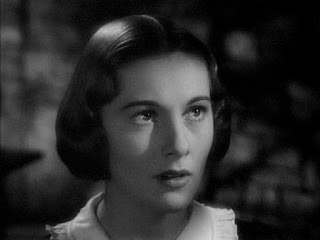
Joan Fontaine as Jane Eyre (1943)
Jane is meek and timid--in her own words, "poor, obscure, plain and little". Jane also possesses great strength of character, steadfast beliefs and a pepperpot temper when she's provoked. In that memorable scene when Mr. Rochester asks her to marry him (in an extremely roundabout way--annoying man!) she tells him in no uncertain terms why she wants to leave Thornfield. "Do you think I can stay to become nothing to you? Do you think I am an automaton? a machine without feelings?... You think wrong! I have as much soul as you, and full as much heart!" In general, Jane is a very gentle person, but there are times when she just can't take it any longer. I'm not commending angry words, but I will admit to being excessively pleased when I read this passage. Take that, Mr. Rochester!
Jane is not a people-pleaser. She speaks candidly and with complete honesty. "I like rudeness a great deal better than flattery. I had rather be a thing than an angel." As a child, this often got her in trouble with her odious schoolmaster and horrible aunt. And if she had been employed by a man who was not in love with her, this talent probably would have cost her her job, too. :)
Jane is opinionated without being outspoken. She has her standards and her beliefs, and she won't be shaken in them--but she doesn't cram what she thinks down people's throats. However, her book is told in the first person, so the reader at least gets a healthy dose of Jane's opinion on everything. "Conventionality is not morality. Self-righteousness is not religion. To attack the first is not to assail the last."
There is but one thing in which I cannot admire Jane---why, why, why did she fall in love with Mr. Rochester???

Ruth Wilson and Toby Stephens in Jane Eyre (2006)
In case you hadn't noticed yet, I'm not a big fan of Edward Fairfax Rochester. He's a liar. He's willing to be a bigamist. He's moody and strange. (That's not attractive, ladies.) He's violent. He's had an immoral past (and is rather unrepentant when Jane confronts him). Jane, on the other hand, is truthful, loyal, open, forthright, moral, just, and a woman of integrity. Could two people ever be less suited to each other?
You know the basic story. Mr. Rochester wants to marry Jane, but one tiny detail stands in their way--his insane wife, locked in the attic. Jane leaves Thornfield as soon as she finds out about Mrs. Rochester (not without intense emotional trauma). "Jane Eyre, who had been an ardent expectant woman--almost a bride--was a cold, solitaray girl again: her life was pale; her prospects desolate." I feel so sorry for Jane at this point--does the whole world have to be against her?
"Don't worry," Hayden says in her review of Jane Eyre on
her blog, "the book ends with a happily-ever-after. It just takes a really long time to get there."
It takes a little too long, in my opinion. Jane deserves a happy ending now. But it's all okay, because there's one more virtue of Jane's that I forgot to mention.
She's unbelievably patient. She can wait for a happy ending.

Josephine Serre and Charlotte Gainsbourg in Jane Eyre (1996)
P.S. I have not seen any of the film adaptations of Jane Eyre, so I don't have a video clip for this post.