Showing posts with label heroines. Show all posts

Tuesday, March 13, 2012

Period Drama Heroines #1: Anne Shirley


Yet Another Period Drama Blog

"Isn't it splendid to think of all the things there are to find out about? It just makes me feel glad to be alive-- it's such an interesting world. It wouldn't be half so interesting if we know all about everything, would it? There'd be no scope for imagination then, would there?"
~Anne Shirley, Anne of Green Gables, ch. 2


Now before you all look at the title of this post and go, "What? Wait a minute..." and then scramble through my back posts wondering what on earth happened to Heroine #2, let me just say that she's coming.  Eventually.  But she isn't Anne, and I wanted to do Anne for Anne week, and so I muxed things ip a little.  You'll survive.


So, my favorite period drama heroine of all time.  I'm actually rather nervous about writing this post.  I so badly want to do Anne justice, and I don't quite feel equal to the task of writing about someone I love and admire so much (yes, she's fictional--your point?). 

Mark Twain once said that Anne Shirley was the dearest and most lovable child in fiction since the immortal Alice (of Wonderland fame, for all you non-Lewis-Caroll-fans out there).  This sweet comment almost makes up for his crack about Jane Austen.  (The gall of that man.  I don't care if he did write some of the best American literature ever, NOBODY says that kind of stuff about my Miss Austen and gets away with it.  Nobody.  Mark Twain is hereby subjected to the Miss Dashwood Malicious and Menacing Menace.)   

See? This is Anne's reaction to Twain's audacity.
I'm going off on a rabbit trail again.  Back to Anne.  

So, why do I love Anne-spelled-with-an-E Shirley? Or should I say, how do I love her?  Let me count the ways.

Firstly, she was born in March and all people born in that delicious month are automatically amazing in my book. :D Secondly, she is just so ridiculously endearing.  She may be over-the-top at times, she may talk as if her tongue was hinged in the middle, she may get into countless scrapes, but you can't help loving her anyway.  Anyway? What am I saying? You can't help loving her because of all the aforementioned aforementions! 


One of the things I love about Anne is her refreshing real-ness.  I firmly believe that the characters are the best part of any book worth reading, and Anne just makes her books sparkle.  You can really imagine just sitting down and having a good conversation with her.  She says things whenever they come into her head, with no worries or self-consciousness.  This quote is one of my favorites:  "I'm always afraid going over bridges. I can't help imagining that perhaps just as we get to the middle, they'll crumple up like a jack-knife and nip us. So I shut my eyes. But I always have to open them for all when I think we're getting near the middle. Because, you see, if the bridge did crumple up I'd want to see it crumple."

Anne talks.  A Lot.  Which is something that I can completely identify with, because I talk a lot too.  "But I can stop when I make up my mind to it, although it's difficult."  

But of course it's not that difficult to stop when it's physically impossible to say a single word.

Anne's imaginative.  She's dreamy.  She makes up things in her head when the reality before her isn't up to snuff.  She doesn't let things get her down.  Oh, sure, she's dramatic and emotional and has been known to sob her eyes out over the fact that her bosom friend will someday marry and leave her (I love that part) but in general she's an incurable, cock-eyed optimist.

Marilla: You set your heart too much on frivolous things and then crash down into despair when you don't get them. 
Anne: I know. I can't help flying up on the wings of anticipation. It's as glorious as soaring through a sunset... almost pays for the thud. 
Marilla: Well, maybe it does. But I'd rather walk calmly along and do without flying AND thud.

I'm more like Marilla, to be honest-- I'd rather do without the thud, and if it means doing without the flying, I'm okay with that.  But Anne is not.  Anne would rather fly.  And then thud.  Which she does, briefly, up on Moody Spurgeon's kitchen roof. :P


Anne is also one of the friendliest heroines I've ever been acquainted with.  Obviously she and Diana Barry are besties, but just think of all the unlikely friendships that Anne forms over the course of the books and movies.  Imagine, if you will, how sad and lonely Katherine Brooke's life might have been if it weren't for Anne.  Without Anne, Leslie Moore would still be bitter and resentful, Philippa Gordon would be frivolously frittering her life away, Davy Keith might have grown up to be a juvenile delinquent and Josie Pye might have been even worse than she already is.  Because how do you know that Anne didn't have a good influence on her?  I mean, if Josie had never met Anne, she might have been a gazillion times more snotty and insufferable.  If that is possible.  My dad loves to quote Diana's line from the movie" "Josie doesn't have to cheat.  She just does it 'cause she's a Pye."

But lest you begin to think Anne's perfect, I'll set you straight.

The real problem with Anne is that she doesn't see what's right under her nose for three entire books and two entire movies.  She's so caught up in the "wings of anticipation" and her romantic dreams that she doesn't see the Prince Charming walking her home from teaching school every day.  Roy Gardner and all his melancholy inscrutability seemed more attractive to her than the realistic, humorous, sweet, wonderful (and handsome, can't forget that) Gilbert Blythe.  Now, we all know that she got over the childish grudge regarding the slate by the end of the first movie (and the first book), but it took her FOUR HOURS of movie-time in The Sequel (and two more novels) to finally realize that Gil was the one for her.  And really, if he hadn't gotten typhoid, she might still be waltzing around with her head in the clouds... without him.  That typhoid germ-virus-thingy was the real matchmaker.  Emma Woodhouse can't even compete.

But anyway, regardless of how or when or where, she finally did come to her senses and realized that she didn't need diamond sunbursts or marble halls...

Everybody say "awwwww."  Right now. (Please.)

(I didn't make this, by the way, but I can't remember where I found it.) 
I've been known to frequently match songs with characters as if I were creating musicals, and when I think of Anne Shirley, the two songs that come to mind are "Pure Imagination" and "I See The Light".  The latter especially. 

All those days watching from the windows
All those years outside looking in

All that time never even knowing
Just how blind I've been
Now I'm here, blinking in starlight
Now I'm here, suddenly I see
Standing here, it's all so clear
I'm where I'm meant to be!

All those days chasing down a daydream
All those years living in a blur
All that time never truly seeing
Things, the way they were.
All at once, everything looks different
Now that I see you.


"I don't see how you could keep on loving me when I was such a little fool ... I don't want sunbursts and marble halls. I just want YOU. You see I'm quite as shameless as Phil about it. Sunbursts and marble halls may be all very well, but there is more `scope for imagination' without them. And as for the waiting, that doesn't matter. We'll just be happy, waiting and working for each other--and dreaming. Oh, dreams will be very sweet now." 
~Anne of the Island, ch. 41

Wednesday, February 29, 2012

Period Drama Heroines #3: Elinor Dashwood

 "You do not suppose that I have ever felt much.—For four months, Marianne, I have had all this hanging on my mind, without being at liberty to speak of it to a single creature; knowing that it would make you and my mother most unhappy whenever it were explained to you, yet unable to prepare you for it in the least." ~Sense and Sensibility by Jane Austen, chapter 37

We've said it over and over and over again. Whether we're arguing about characters in Les Miserables, vehemently discussing Edward Ferrars' hero qualifications or simply laughing over a funny scene in Pride and Prejudice, this phrase keeps cropping up when I talk at length with my sister Anne-girl: "We are so Elinor and Marianne!"

In case you're wondering, we mean that I'm Elinor and she's Marianne.  She's the uber-excitable one, the one whose sorrows and joys can have no moderation.  I'm the one who generally yanks her down out of the clouds and offers practicality when she flies up on the wings of inspiration.  (We are best friends, however. Let's set the record straight from the beginning.)  She's the emotional one, and I'm the other emotional one. (Heh.) Although, in all seriousness, she's much more emotional than I am.  In general.

Why am I blabbing on and on about my sister and myself when this post is really supposed to be about Elinor Dashwood?

Well, you see, I call myself Elinor Dashwood.  I compare myself to Elinor Dashwood--of all Jane Austen's heroines, she's the one I identify with most.  But really, I'm not as much like Elinor Dashwood as I'd like to be.  In reality, I admire her and want to be like her more than I really am like her.  (Hope that made sense. Sentence construction isn't my strong point.)

So, let's look at Elinor's good points (and bad points) in an organized and thoughtful manner.  (Hah.)

First of all, Elinor is Unfailingly Patient.  One of my favorite scenes in Sense and Sensibility (1995) is the one where all three other Dashwood women have fled to their rooms in tears, and poor Elinor is left alone on the stairs at Barton cottage with a cup of tea in her hand.  She stands there for a moment, listening to the stormy sobs emanating from behind the various closed doors, then philosophically sits down on the stairs and drinks the tea so as not to waste it.

(via)
Elinor's patience comes in handy when the Miss Steeles enter the story.  Anne "Nancy" Steele is annoying but funny--Lucy, her younger sister, is malevolent, manipulative, malicious and mean.  (Miss Dashwood likes alliteration.)  I still haven't figured out how Elinor managed to go for more than ten minutes without landing a Fanny-Dorrit-esque high kick right in Lucy's silly simpering face.  Grrrrrr.


Not only does Lucy tell Elinor about her secret engagement to Edward for the SOLE PURPOSE of making Elinor feel bad, she swears Elinor to secrecy on the subject (even though Diana Barry will tell you that it's dreadfully wicked to swear).  This gives Lucy negative eighteen thousand Miss Dashwood points, because everybody knows that the best part of being told a secret is being able to tell it to somebody else.  (What are sisters for, anyway? Other than borrowing and lending clothes, I mean?)  I hate Lucy Steele.

But I'm not here to talk about Goosey Lucy.  Nor am I here to hurl rotten fruit at the lady I just mentioned.  I'm here to talk about the honorable Elinor Dashwood, and when I say honorable I'm not just being fake-ly formal.  Elinor is the soul of honor.  (Did I really just type "honorability" and then sit there for a minute wondering why it looked wrong? No, of course I didn't.)  Like another person in Sense and Sensibility whom I could mention (hint: he doesn't appreciate poetry, his name begins with an E and ends in DWARD and his last name begins with an F) Elinor does not let people down.  Ever.  Even when those people are not worthy of, say, John Thorpe's attention.

Elinor could have easily rationalized that the ends justified the means and then raced off to spill the dirt on Edward and Lucy to Marianne.  She could have told herself that Lucy wasn't worth making promises to.  But she didn't--she kept her word even when it was little more than mental torture to have to do so.


Of course, all this honor and discretion and ability to keep her lips zipped doesn't mean that Elinor doesn't have feelings.  It just means that she is mature enough to conceal her feelings.   Unlike Marianne, Elinor didn't fling herself down on her bed, cry uncontrollably and refuse even olives when she realized that Edward was betrothed to another woman.  (And all you Marianne fans out there--please, please don't get mad.  I am one of you.  I really am.  But you will admit, I hope, that Marianne's behavior was over-the-top at times.)

If you still don't think that Elinor feels deeply, go to the top of this post and read the beginning quote again.

Now, back to the whole honor thing.  Honor and honesty go hand-in-hand, and Elinor is unfailingly honest.  Except, of course, when Good Manners require her to be otherwise. "It was impossible for [Marianne] to say what she did not feel, however trivial the occasion; and upon Elinor therefore the whole task of telling lies when politeness required it, always fell." ~chapter 21
Whoever said Sense and Sensibility wasn't funny? Eat your words!

We'll talk a little bit more about humor in a minute, but first I want to say just one more thing about honesty.  Elinor possesses a skill that I desperately want to cultivate: namely, she tells the truth, but not when it isn't necessary.  I don't mean that she lies.  I mean that she doesn't just bluntly say things that are true-but-not-nice.  She holds her tongue.  She speaks with discretion.  Like the Proverbs 31 woman, Elinor opens her mouth with wisdom, and in her tongue is the law of kindness.  Elinor thinks before she speaks and doesn't say things without pondering them first.  It's a habit we'd all (yours truly in particular) do well to emulate.


Now, about Elinor's sense of humor--frankly, I think anyone who says Elinor has no sense of humor needs to go read the book again.  Or at least watch the 1995 film.  (Can't vouch for the 2008 miniseries, but Melody is slowly and surely persuading me to see it, so maybe someday I'll have an opinion to offer.)
"Now there is no one to regard [the leaves at Norland]. They are seen only as a nuisance, swept hastily off, and driven as much as possible from the sight," [said Marianne.]
"It is not every one," said Elinor [to Marianne], "who has your passion for dead leaves."
~chapter 16

Consider, too, one of my favorite lines in the movie:

Marianne: When is a man to be safe from such wit, if age and infirmity do not protect him?
Mrs. Dashwood: "Infirmity"?
Elinor: Do you call Colonel Brandon infirm?
Mrs. Dashwood: If Colonel Brandon is infirm, than I am at death’s door.
Elinor: It is a miracle your life has extended thus far.

Oh, and then of course there's this:
Elinor: Marianne, you must change your clothes or you will catch a cold.
Marianne: What care I for colds when there is such a man?
Elinor: You will care very much when your nose swells up.

Practicality is an important character quality, after all.  Sure, it sounds boring, but somebody has to add up the household accounts and tell the hired man not to buy expensive groceries.  ("Do you want us to starve to death?" "No.  Just not to eat beef.")

Okay, enough rambling.  My sister Molly (who enjoys the videos on my blog immensely) is probably clamoring by now for Elinor's Best Scene, so here you go.  The scene of which I speak takes place from 3:18 to 6:05. 


"Edward will marry Lucy. And you and I... will go home."  Simple, not exactly profound, but that one line (okay, two lines) perfectly expresses Elinor's personality.  "Always resignation and acceptance! Always prudence and honor and duty.  Elinor! Where is your heart?" I like this scene not because Elinor finally lets the dam burst and gives Marianne what's coming to her (because honestly, am I the only one who's just a little annoyed with Marianne at this point?) but because of the way the scene ends.  After the soul-outpouring and getting everything off her chest, Elinor turns right back to Marianne to hug her.  Frustrated and heartbroken though she might be, Elinor is not going to let her sister cry without offering some support.


Ultimately, Elinor cares about other people more than she does about herself--and that's the most admirable thing about her.  That's what I most want to emulate in Elinor's character.

That, and Emma Thompson's hair.  Those braided buns are absolutely gorgeous.

Monday, February 27, 2012

Calling All Kindred Spirits

I absolutely love Anne of Green Gables.  The character, the books, the movies, you name it and I'll be your friend forever.  Anne Shirley is the quintessential literary heroine and, hands down, my favorite. Ever.

So it is with great excitement, a lot of thrills and a dash of romanticism that I announce the blog event I'm planning to host...

Anne of Green Gables Week, which will take place March 11-17, 2012.  A six-day birthday party for the imaginative redhead in all of us, a literary blogging event for any and all kindred spirits who love Anne and love to laugh.  (I hate coming up with taglines.)

When Anne tells Marilla about herself (the plain facts, not what she imagines about herself--sadly) she says that she was born in March in Bolingbroke, Nova Scotia.  When you do the math and add up everyone's ages in Rilla of Ingleside (the only Anne book with specific dates) you can deduce that Anne was born in March of 1866.  However, we don't know exactly when in March her birthday falls.  I have always held to the belief that it takes place smack in the middle of the month, which is why this party celebrating dear Anne Shirley's 146th (yipes) will take place from the 11th to the 17.

*in a loud whisper* "And... that also happens to be my birthday [week].  Just so ya know." (It's not a birthday party for me.  But I didn't mind planning Anne's birthday to coincide with mine. :) And I'm not turning 146.  You may guess how old I'm going to be, if you like.)


I do hope you'll all participate in this celebration of Anne's birthday! I've been planning this event ever since November, and tried hosting the Jane Austen Birthday Party back in December as a sort of dry run.  I was quite inexperienced then (and of course am oh-so-experienced now... HA) but I hope that now I've learned at least a little bit more about hosting a blog event.  There will be guest posts, there will be movie reviews, there will be character quizzes and a dream casting for a new movie and some totally off-the-wall tag questions, and it will all be very, very romantic.  (And by the end of the week, I probably won't ever want to hear that word again, Jane Andrews.)

So if you're of the race that knows Joseph, I would love it if you'd put one of these buttons up on your blog to advertise the event... and I'd love it even more if you'd also come back to Yet Another Period Drama Blog on March 11th to join the fun!

Large Buttons (450 or 500 pixels wide)

Yet Another Period Drama Blog


Yet Another Period Drama Blog


Yet Another Period Drama Blog


Yet Another Period Drama Blog

Yet Another Period Drama Blog

Yet Another Period Drama Blog

Small Buttons (300 pixels wide)
Yet Another Period Drama Blog

Yet Another Period Drama Blog

Yet Another Period Drama Blog

Yet Another Period Drama Blog

Yet Another Period Drama Blog

Yet Another Period Drama Blog

Tuesday, February 21, 2012

Literary Heroine Blog Party

I've been working on my answers to Kellie's Literary Heroine Blog Party questions for the past week, but it's only today that I've finished them.   If you aren't already participating, just hop on over to Accordion to Kellie (click on the link below) and check it out!  She's hosting a fun tag (my answers are below the below) and a pretty amazing giveaway.  

(This is Cecily Cardew from The Importance of Being Earnest, if you're wondering--
she isn't my absolute favorite literary heroine, but I love her dress in this photo)
~The Questions ~

Introduce yourself! Divulge your life's vision, likes, dislikes, aspirations, or something completely random!

Good grief, where to begin?  Well, at the beginning of course, then go on until I get to the end.  Then stop.  (Alice in Wonderland, anyone?) First of all, I am a daughter of the King of Kings, bought with a price, ransomed for all eternity by Jesus Christ, my Savior.  My identity is in Him, never to be lost.
I am also a history buff, a period drama nut, a bookworm, a lover of all things chocolate and a member of the League of the Scarlet Pimpernel.  Without music and Jane Austen, life would be a blank to me.  I suffer from a serious case of cacoethes scribendi, read anything I can lay my hands on (especially classics and historical fiction), take long and vigorous walks, love riding my bicycle and am completely happy when I'm in the kitchen, stirring up something delicious (preferably with tomatoes and garlic or chocolate, but NOT all three) and singing along at the top of my lungs to the amazing music from Les Miserables.
I've been homeschooled all my life, I have four younger siblings who I love to pieces, two amazing parents, and a lot of wonderful, kindred-spirit blogging friends who make my day every day.  I am a stickler for correct spelling and word usage.  But I am nice about it.  I hope.
Also, I like historical fashion.  Let's be friends!

What, to you, forms the essence of a true heroine?


A girl who isn't afraid to stand up for what she believes in, who loves unconditionally, who is brave and truthful and sweet and generous.  But not perfect, because if she's perfect nobody can relate to her, least of all me.   And of course, a good sense of humor Does Not Come Amiss.

Share (up to) four heroines of literature that you most admire and relate to.

Anne Shirley of Anne of Green Gables- because there's just something in me that clicks with Anne.  I'm not as dreamy and imaginative as she is, but I share her thoughts about kindred spirits (that is the general idea) and I admire her zest for living, her optimism, her bookworm-ish-ness and her ability to make friends with anyone.  Anne is amazing.
Jo March of Little Women- She's a writer, do I need to say more?  Well, yes. Jo's fiery and impassioned and gets mad easily (well, of course in this I don't relate to her, because naturally I NEVER get mad) and she likes things to stay just as they are.  Like me. :)  But I admire her because she's selfless and fiercely protective of her family and willing to do the right thing even when it's hard.
Elizabeth Bennet of Pride and Prejudice- She's witty, sparkling, funny and always on her toes.  She's everything I want to be and... well, am not.  But we both have three younger sisters, so see, I can relate.  (Only I trust my sisters are quite unlike hers...) Lizzy isn't perfect, but she goes through a lot of maturing throughout her story, and I admire her willingness to admit she's wrong in the end.
Elinor Dashwood of Sense and Sensibility- Well, duh.  I mean, I have her NAME and all that.  Seriously, though, Elinor is a lot like me in some respects and rather unlike me in others.  We're both blessed with sisters whose sorrows and joys can have no moderation, we both have a tendency to hide our feelings, and we both like Edward Ferrars. :P Elinor is an amazing character, and I want to be like her... but I'm not going to say much more, I'll just save it for my post on her later this week.

Five of your favorite historical novels?


I only get to choose five??? Oh, very well.  I'm assuming "historical novel" encompasses both contemporary historical fiction and classic literature--or at least, that's how I'm interpreting it.  These aren't necesarily my Top Five Favorites, they're just five OF my favorites.  In no particular order, Pride and Prejudice, The Scarlet Pimpernel, Wives and Daughters, Johnny Tremain, Les Miserables.


Out of those five books who is your favorite main character and why?


This is seriously a toss-up between Johnny Tremain, Jean Valjean, Molly Gibson and Sir Percy Blakeney.  *ducks tomatoes and hides behind Sir Percy* No, I mean it! I like them all for different reasons, and I can't decide which I like best.  My sister's probably getting ready to boot me out of the League, but I really think I like Molly and Valjean and Johnny just as much as that Baronet guy.  *ducks cabbages*

Out of those five books who is your favorite secondary character and why?


Out of those five books, it'd be Rab Silsbee from Johnny Tremain, hands down. (Please, please tell me you've read this book.)  Ooh! Also maybe Marilla Cuthbert from the Anne books.  And out of all the books I've read, it might have to be... um... either Jeeves from any of P.G. Wodehouse's books, or maybe Philippa Gordon or Diana Barry from the Anne books, or maybe Daniel Peggotty or Aunt Betsey Trotwood from David Copperfield.  Ooh! Edmund Sparkler from Little Dorrit!
...This is too hard.

If you were to plan out your dream vacation, where would you travel to - and what would you plan to do there?


"Oh, to be in England, now that April's there!" I would most definitely go to the British Isles, where I'd visit every place mentioned in Jane Austen's novels (like Sir Walter Scott, I'd hie me to Lyme and say, "Don't talk to me of the Duke of Monmouth--show me the exact spot where Louisa Musgrove fell!"), and tour London like a tourist.  I'd also stop over in Ireland and Italy.  Because they're gorgeous places.  Wouldn't it be fun to zoom through Rome on a Vespa just like Audrey Hepburn?  :)


What is your favorite time period and culture to read about?

The entire nineteenth century.  Also the Edwardian era. And anything British (from those periods) is going to immediately grab my attention.


You have been invited to perform at the local charity concert. Singing, comedy, recitation - what is your act comprised of?

Probably singing.  From a musical.  From Les Miserables.  Yeah, probably "On My Own".  Or "Stars". Or even "Bring Him Home."  If I had a prayer of hitting those high notes.  Why am I writing such short choppy sentences?

If you were to attend a party where each guest was to portray a heroine of literature, who would you select to represent?


Marguerite Blakeney, for two reasons.  A) She has the best clothes--- that is, the ones that come up high enough if-you-know-what-I-mean.  B) Whenever Marguerite goes anywhere, she's escorted by the one and only Sir Percy Blakeney. Need. I. Say. More?

What are your sentiments on the subject of chocolate?

"And on the eighth day, God created chocolate." Dark is the best, milk is amazing, white is too sweet.

Favorite author(s)?
  • Jane Austen
  • Charles Dickens
  • Elizabeth Gaskell
  • Lucy Maud Montgomery
  • Louisa May Alcott
  • P. G. Wodehouse
  • O. Henry
  • Mark Twain
  • Charlotte Bronte
  • Baroness Orczy
  • Sir Arthur Conan Doyle
  • Elizabeth Enright
  • E. Nesbit
  • Carol Ryrie Brink
  • Laura Ingalls Wilder
(Yes, I took advantage of the "s" that made "author" plural.)

Besides essentials, what would you take on a visiting voyage to a foreign land?


My camera.  A notebook and a stash of pens to write down impressions of things.  Money. :P Okay, I guess that's an essential.

In which century were most of the books you read written?


The nineteenth, definitely.  Totally an old-fashioned girl here.


In your opinion, the ultimate hero in literature is…

Mr. George Knightley from Jane Austen's Emma.  He's quiet and unassuming and unpretentious, but he has a heart of gold, an amazingly generous spirit, wisdom beyond belief and a delightful sense of humor. Also, he's incredibly sweet and not perfect.  Because nobody wants a perfect man.  At least I don't.  He'd show me up shamefully.
Mr. Knightley isn't the kind of guy who shoots bad guys every morning before breakfast.  (That sentence makes me laugh.  I'm reading it over and over again and laughing, and now I'm laughing again, but this time I'm laughing at how pathetic I am.  Um.  Anyway.)  He isn't a superhero.  He isn't dashing and swashbuckling and he probably never fenced in his life.  (Sad to say.)  But he's the kind of man that I want to marry someday.  He loves Emma unconditionally, with all her faults and failings, and he is never afraid to admit when he's wrong.  (It doesn't happen often, but that's be cause he just isn't wrong very often.) Now don't get ME wrong, I have nothing against Mr. Darcy and Mr. Thornton and Henry Tilney and Sir Percy and Colonel Brandon.  They're all great guys and totally deserving of the title "hero."
But I'm still Team Knightley.

Describe your ideal dwelling place.


The castled crag of Drachenfels.  :P
No, kidding.  My ideal dwelling place would be a tiny cottage on the coast in Price Edward Island, preferably at the foot of a lovely lighthouse.  It's on a cliff, overlooking the sea, with the smell of salt air and the wail of seagulls and stormy clouds (or sunny skies) overhead.... ahhhhh.
Inside, the cottage is charming and old-fashioned, but completely fitted out with modern conveniences ("I said to Mr. E, don't give me two carriages, don't give me enormous houses, but I could not live without my indoor plumbing. No. Life would be a blank to me.").  The kitchen has a low ceiling and gingham curtains at the windows and a cat or two and geraniums in pots... and of course there's a fireplace in the tiny, cozy living room.  And there's wallpaper on all the walls, which I adore.  The staircases are crooked and twisty but simply jam-packed with character, and there's an Attic.  Because I love attics.
In short, my dream house is one Lucy Maud Montgomery would approve of.

Sum up your fashion style in five words.


"I have no particular style." There, five words. :)
Oh, you want me to be more specific? Very well.  Skirts, feminine, old-fashioned, vintage, sweaters.

Have you ever wanted to change a character’s name?


Definitely, many times, but the only example that comes to mind is Mr. Knightley.  Why must he be George and his brother John? Why can't they be reversed? During the entire first half of Emma, I was under the impression that their names WERE reversed, and when I discovered that "my" Mr. Knightley was actually called George, I was Most Severely Put Out.
I've gotten used to it since then, but I still don't like the name George.


In your opinion, the most dastardly villain of all literature is...


Chauvelin's pretty awful in the Scarlet Pimpernel books (although I actually sympathize with him in the movie) but I can't really think of any truly dastardly villains.  Except perhaps Oskar the Odacious in The Romantical Perils of Lester and Lynette.  (Eighteen thousand Miss Dashwood points if you get that reference and your name isn't Melody or Anne-girl.)

Three favorite Non-fiction books?


A Chance to Die: The Life and Legacy of Amy Carmichael by Elisabeth Elliot, Do Hard Things by Alex and Brett Harris, Joyfully at Home by Jasmine Baucham.

Your duties met for the day, how would you choose to spend a carefree summer afternoon?


Either on a long, leisurely walk, or perhaps on our back porch with a tall glass of lemonade and a good book. Or maybe I'd write a blog post. :) Or call a friend on the phone.

Create a verbal sketch of your dream hat - in such a way as will best portray your true character.


My true character has to be summed up in a piece of headgear??? Oh dear.  Here goes:
A big, wide-brimmed hat made of straw ("Why mind the fashion? Wear a big hat and be comfortable!") in a sort of Edwardian style, something you might see on Road to Avonlea... lovely and cool and shady, with yellow roses and some trailing ribbon, but not too flowery "with weeds here and weeds there". :P Something sensible yet utterly fetching and cute.  Without an elastic thingy, though, because they pinch my chin.


Share the most significant event(s) that have marked your life in the past year.


*hastily reviews year* Well, I had the amazing opportunity of helping out at with a young ladies' Christian conference last August (is anyone else familiar with Bright Lights?), and the Lord used that to teach me a great deal.  Soon after that I began leading a Bible study group for preteen girls, and that's been a fantastic experience.  It really is true that the teacher learns more than the students, and God has been using this ministry to instruct me and humble me in ways I wouldn't have imagined.

Share the Bible passage(s) that have been most inspiring to you recently.


First Corinthians 13, the Love chapter.  It's always been a familiar passage, but lately the Lord has been impressing on me the fact that I need to actually, you know, put those character qualities (patience, kindness, not being easily provoked) into action instead of just being able to recite them. :) "Though I speak with the tongues of men and of angels, and have not charity, I am become as sounding brass, or the tinkling of a cymbal..." 


Thank you, Kellie, for hosting this lovely literary event!

Monday, January 16, 2012

Period Drama Heroines #4: Amy Dorrit

"I would never hurt you, Father."
~Amy Dorrit, Little Dorrit (2008)

(In case you're wondering where #5 went, I wrote about her during Sense and Sensibility Week back in November.)

In one of my favorite books, The Hiding Place, Corrie ten Boom tells of how her father comforted her when the man she loved married another woman.
"Corrie," he says in chapter three, "do you know what hurts so very much? It's love.  Love is the strongest force in the world, and when it is blocked that means pain.  There are two things we can do when this happens.  We can kill the love so that it stops hurting.  But then of course a part of us dies, too.  Or, Corrie, we can ask God to open up another route for that love to travel.  God loves Karel--even more than you do--and if you ask Him, He will give you His love for this man, a love nothing can prevent, nothing destroy.  Whenever we cannot love in the old, human way, Corrie, God can give us the perfect way."

At this point you are probably raising your eyebrows and saying, "That's a perfectly lovely quote, Miss Dashwood, but what on earth does it have to do with Amy Dorrit?"

Lots.

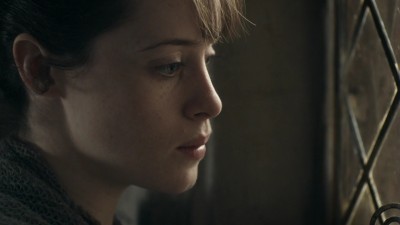
Claire Foy as Amy Dorrit
Amy Dorrit, also known as Little Dorrit because of her diminutive stature, was born in the Marshalsea debtors' prison and raised as a pauper.  Looked down upon by her snobby, selfish family and forced to work as a seamstress to put bread on her father's table, Amy has a hard life, but she never complains.  When she meets the kind, caring and compassionate Arthur Clennam--a man who is facing problems of his own, yet takes the time to try and help the Dorrit family--Amy falls in love with him.  The only problem is, Arthur (15 years Amy's senior) sees her as a child... and fancies himself in love with someone else.

Matthew Macfadyen as Arthur Clennam with Amy Dorrit
(Are you starting to see parallels?)

Meanwhile, John Chivery (assistant turnkey at the Marshalsea and longtime family friend of the Dorrits) is desperately in love with Amy, and proposes to her in complete confidence that she'll accept him.  But she doesn't.  She turns him down, because she knows she's in love with Arthur and could never love John in the way that a wife should.

This might look like selfishness, since she effectively broke John's heart in refusing him (and the hearts of all the movie viewers... sigh...).  But it's not.  It took courage for Amy to say no to John.

"I'm sorry, John, but I could never feel about you that way.  The way you'd like me to."
"But... you might come to."
"No.  I'm sorry, John.  I know I never shall."

Then he asks her if there is someone else, and.... why am I transcribing this whole thing if I could just show it to you?   Here you go.  Amy's Best Scene.  The part I refer to is from 2:29 to 5:12, but if I were you I'd just watch the whole thing. :)


You notice that when John asks if there is anyone else, she evades the question with, "I don't believe I shall ever marry."  It wasn't necessary to hurt him further by saying that there was someone else.  Little Dorrit firmly believed she didn't have any hope of Arthur's love, so she didn't make matters worse by mentioning him.  

And then, after all this had ended, she went on with her life.  She was still in love with Arthur and that never changed, but she didn't let herself mope about it.  To die for love? Not Amy Dorrit. (Marianne would not have approved, heehee.) 

Amy Dorrit's character is one that is best seen through her love of people.  She's stuck with probably one of the worst families in period drama  history (okay, maybe Anne Elliot could rival her for that title) but she is always patient with her demanding father, brother and sister.  No matter what they say or do to her, she responds with gentleness and humility. She loves them in the perfect way that Caspar ten Boom spoke of.  "Love is patient, love is kind.  It does not envy, it does not boast, it is not proud..."

I've heard it said that Amy Dorrit is too good, too perfect, that she has no backbone and can't even stand up for herself.  I disagree.  Amy is not a doormat.  She may not speak up for herself, but when someone else is wronged, she springs to the defense.   Her rascally brother, Edward "Tip" Dorrit, writes a rather rude letter to Arthur Clennam asking for a loan, and Arthur politely refuses to comply (knowing that Tip will just waste the money).  Upon receiving Arthur's reply, Tip goes into a tirade against Arthur, and when Amy gently remonstrates, he lashes out at her.  Then comes Amy's applause-inducing speech. :)

"How dare you speak like that to me?! And how dare you insult a man who is worth ten of you? Have you any idea who got your debts paid? --I love you Tip; but sometimes I'm ashamed to have you as my brother!"

(It's during this scene that my favorite music, dubbed the Tragedy Theme, plays. FYI.)

GO, AMY.

Sarah Pickering as Amy Dorrit
Things only get worse for poor Amy when the Dorrits inherit a fortune and Mr. Dorrit hires a gentlewoman by the name of Mrs. General to teach Amy and Fanny how to be Ladies Of Society (properly pronounced as Sow-Sigh-Uh-Tee).   Under Mrs. General's scrutiny, everything Amy does--even calling her father "Father"--is wrong.  Yet Amy bears it all without complaint.

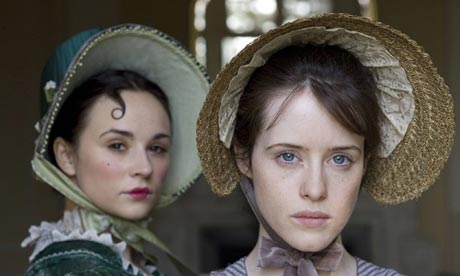
Emma Pierson as Fanny Dorrit and Claire Foy as Amy
Then tragedy strikes again... and again.  Amy is left alone in the world and, simultaneously, Arthur is thrown into the Marshalsea prison.  Amy goes to the Marshalsea to nurse Arthur back to health after he falls ill, and that is when she learns that he loves her, too.  

But the story isn't over, because Amy begs Arthur to allow her to pay his debts... but he says no.  He will not be beholden to her, but that doesn't stop her from coming to see him.  Then the Evil French Guy (alias whatever alias he's using at the time) gives Amy a mysterious letter, and old Mrs. Clennam (who employed Amy as a seamstress in the dear dead days gone by never to be spoken of) reveals a dark secret to Amy, begging for her forgiveness.
Irrelevant, but doesn't she have the most beautiful blue eyes?
And this is what Amy says to her (from the book, not the movie, haha).  
"O, Mrs Clennam, Mrs Clennam," said Little Dorrit, "angry feelings and unforgiving deeds are no comfort and no guide to you and me. My life has been passed in this poor prison, and my teaching has been very defective; but let me implore you to remember later and better days. Be guided only by the Healer of the sick, the Raiser of the dead, the Friend of all who were afflicted and forlorn, the patient Master who shed tears of compassion for our infirmities. We cannot but be right if we put all the rest away, and do everything in remembrance of Him. There is no vengeance and no infliction of suffering in His life, I am sure. There can be no confusion in following Him, and seeking for no other footsteps, I am certain."

Yeah, you won't find that on a 2008 TV miniseries.  

Here's another part where the book and movie differ-- in the book *SPOILER ALERT!!* Little Dorrit never tells Arthur the truth about his mother.  She burns the paper that Mrs. Clennam gave her and never mentions it to anyone, even though it means she loses the legacy, because she doesn't want to hurt Arthur.  I'm glad that in the movie Tattycoram gave Arthur the box and he learned the truth, because I think he deserved to know, but I admire Amy-of-the-book for giving up the inheritance to spare Arthur pain. *END OF SPOILER*
Love bears all things, believes all things, hopes all things... love never fails.

But then the question of money is swept aside in the tumultuous final chapters (and episode) and Arthur and Amy come to an understanding.  :) And Arthur's business comes booming back again.  And then they get married.  

And Miss Dashwood is made happy (albeit in need of a box of Kleenex or two), because who deserves a perfectly perfect ending more than Miss Amy Dorrit?

Button made by Miss Dashwood :P

Thursday, December 29, 2011

Just a reminder...


I just want to remind y'all that the last round of the Period Drama Heroine Tournament is underway at Elegance of Fashion! Just click on the picture above to go to the page. Anne Shirley is up against Margaret Hale for the big finish, and *gasp* Margaret's ahead by one vote!!! Now, I love Margaret Hale and I think she's amazing, but seriously, ladies, this is ANNE SHIRLEY she's up against. Please go and vote for Anne if you haven't already!

...Not that I would want to influence you in any way, of course, Harriet.

Tuesday, December 27, 2011

Period Drama Heroines #6: Molly Gibson

Justine Waddell as Molly Gibson in Wives and Daughters (1999)
Of all the period drama heroines in my acquaintance, it is Molly Gibson whose story most resembles that of Cinderella. I mean, think about it. Girl's mother dies, girl and her father live happily together for sixteen years (or whatever it is), girl's father remarries. Girl is not exactly happy about this, especially since the new stepmother is overbearing and ridiculous, and insists on dragging a stepsister into the relationship who is... actually kind of nice.

Okay, the similarities end there.
Anthony Howell, Bill Paterson, Francesca Annis, Justine Waddell and Keeley Hawes in
Wives and Daughters (1999)

Or do they?  Enter Prince Charming (and his brother).  Enter stepmother's scheming. Enter engagement between Prince Charming and evil flirtatious stepsister.  Enter... no fairy godmother.

Cinderella had a magic wand, a gaggle of rodent friends, a pair of glass slippers and the tiniest feet in the kingdom at her disposal when she fell in love with the prince.  Molly Gibson had.... uh.... well, she liked insects.  And she was clever, intelligent, eager to learn, a good listener and of a most forgiving nature.

Justine Waddell as Molly Gibson
Of the two, I think Molly has much more in her to respect than Cinderella ever did.  I admire Molly, not because she "secured" the man of her dreams, but because she was willing to give up the man of her dreams if he was in love with someone else.  (I still maintain he wasn't really in love with Cynthia. "Boyish fancy", and all that.)  Books and movies are full of the guy who gives up the girl so she can marry the man she really likes (John Chivery *sniffle*), but there are few stories that tell of the girl who gives up the guy.

Molly, at the beginning of Wives and Daughters, is just the wee-est bit spoiled.  She's grown up under her father's loving care, and for years it's been just the two of them.  Then in come Hyacinth Clare (why? why?? why must there be such a name on the face of this planet???) and her daughter Cynthia Kirkpatrick, and proceed to make Molly's life miserable.  Not, perhaps, intentionally, but it happens nonetheless.  Mrs. Gibson crumbles everything special that Molly and her father shared (she even bans cheese!) and Cynthia waltzes in and manages to captivate the man Molly is in love with.
You know who she is by now.  Hopefully.
And Roger, like an idiot, falls for Cynthia.

My parents watched Wives and Daughters for the first time this summer, and they both loved it, though my dad told me that there were times he felt like smacking Roger over the head with a two-by-four.

My sentiments exactly.

Molly, unfortunately, is so sweet and inclined to think well of people that she won't let Roger or Cynthia see how she really feels about their engagement.  She can't help liking Cynthia (how can anyone?) even though Cynthia has basically ruined her life.  She's prettier than Molly (well, actually that's debatable because I personally think Molly's lovely), more accomplished and certainly more charming.  Theoretically, any man would fall head over heels for her.  (If he were an idiot.)  And yet Molly is the one who understands Roger, who takes an interest in his interests, who reads his letters over and over and charts his travels on her maps.  Cynthia takes Roger's love for granted, and though Molly could easily hint as much to Roger, she's far too honorable to do so.  Instead, she tries to persuade Cynthia to be a little less nonchalant about the whole thing.  "Yes, he's in love with you!  And he depends upon you, so you should try to deserve him!"


Poor Molly.  Have I mentioned how much I like her?  Well, I do.

The story of Molly's heroism doesn't end there-- and lest from the last few paragraphs you have developed the highly mistaken idea that Molly is a doormat, may I hasten to prove that theory wrong.

Without going into details (this post is too long already), I'll tell you that Molly was instrumental in saving her stepsister's reputation in the incident with Mr. Preston.   Cynthia was too chicken to confront the odious man herself (odious but still kinda pitiable... I SAID KINDA) and so Molly, the convenient Molly, was sent to do it for her.

And she did a marvelous job.
Molly's Best Scene


And then.... AND THEN Roger comes back from Africa.  Ta-dah-dum!  And he and Molly go to a ball together, and Lady Hawwiet pulls a few strings, and as they say (who? who says?), the rest is history (with one of the sweetest kiss-less proposals ever).  And Molly and Roger live happily ever after.

Because hey, it's a book (and a movie).  And because Molly totally deserves a happy ending.

Even if she did keep her shoes on the whole time.

Tuesday, December 13, 2011

Jane Austen Personality Quizzes

Most of you have probably taken the Jane Austen Heroines quiz, but in case you haven't, here is the link to it. I do encourage everyone to take this personality quiz and post the results on her blog! I am Elinor Dashwood... who are you?


I also encourage all of you to take the Jane Austen Secondary Heroines quiz, created by yours truly at proprofs.com. I am Jane Fairfax... who are you?

Miss Dashwood's Result: Jane Fairfax
on quiz: Which Jane Austen Secondary Heroine Are You?


You are Jane Fairfax from Emma!  A shy, pleasant and intelligent young woman, you are easily embarrassed and may or may not be saddled with an aunt who likes to brag on you.  Your taste in men is debatable, but you are a reliable and honorable girl with little nonsense about you.  Life has not treated you as well as it might have, but you deal with problems with good grace and are sure to do well in the end.  You are likable and demurely sweet, and will be a good friend to anyone.
Quiz MakerTake this quiz & get your result

Monday, December 12, 2011

Happy Birthday, Jane Austen!

Yet Another Period Drama Blog


And... Jane Austen's weeklong birthday party begins!

Let's begin with a little confetti, some virtual cake and ice cream, and a tribute to my most favoritest author ever. (Okay, so she's not my only most favoritest author, but she's one of them.)

Jane Austen's stories have, as the cheesy saying goes, stood the test of time.  Two hundred years have passed since her first publication (Sense and Sensibility was first printed in autumn of 1811), and she is now one of the most popular authors in the history of western civilization.

But why? What is it about this quiet woman's writing that has touched so many people?  Why is she still so wildly popular?  Why have her books been standard fare in English literature classrooms, the subject of innumerable films, the tie that binds us Janeites together?  (Stupid spell-check wouldn't accept "Janeites".  I remedied this by adding it to the dictionary immediately.)

I'm no scholar.  I'm not an expert.  I'm not Dr. Dashwood, Professor of Jane Austen's Literature and Highly Knowledgeable About Everything.  I'm just a high school student who respects, admires and aspires to be like  the Austen writer.  So take what I say with a grain of salt, and if you disagree with me, that's what my comment box is for.

Jane Austen's books were written in a contemporary setting.  Her stories take place at the end of the Georgian and beginning of the Regency eras.  Etiquette, clothing, food, transportation and language have all changed drastically since Miss Austen's era, but her works are still relevant to us in the 21st century... and this is why.  I believe that Jane Austen has remained relevant to us today because she wrote about people.

Politics change.  Lifestyles change.  Language changes.  Fashions change.  But people do not change.  Human nature has remained exactly the same as it was in Jane Austen's time (in fact, it's remained the same since Adam and Eve!) and the way people interact with each other will never change.

The first Austen book I ever read was Pride and Prejudice, when I was fourteen.  Summer 2009 was a busy and somewhat stressful season for me, yet I always felt relaxed when I curled up in a chair with P&P. I was captivated from the first page, laughing at Mr. Bennet's sparring with his wife and liking Elizabeth immediately.   I'm a very fast reader, but I stretched out P&P as long as I could. When I finally finished it, I didn't want it to end.  Something in me had connected with the characters in a way that doesn't happen often.  There are few books that touch me the way Pride and Prejudice did (among them are Anne of Green Gables, Johnny Tremain, Little Dorrit, if you're curious).  When I finished the book, my mom and I watched the 1995 A&E miniseries together, and I fell in love with the story all over again.

That was the beginning.  Over my ninth grade year, I devoured Sense and Sensibility and Emma, then read Mansfield Park and Persuasion in summer 2010.  On the ride home from our family vacation in May of this year, I laughed myself silly over Northanger Abbey. I was hooked.  The language was different from what I was accustomed to speaking, the manners and customs a bit unfamiliar.  But the people, the characters--they leapt off the page.

Elizabeth Bennet inspired and amused me.  Elinor Dashwood was a kindred spirit.  Marianne gave me opportunity to laugh and to cry.  Catherine Morland made me giggle and Anne Elliot made me think.  Fanny Price set an example for me, while Emma Woodhouse made me groan and shake my head--but I loved her anyway.  I choked with laughter over Mr. Collins and Mrs. Jennings, shook my fist at Mrs. Norris, huffed in exasperation at Sir Walter Elliot, shot imaginary arrows at Willoughby and Henry Crawford, adored Colonel Brandon and fell in love with Mr. Darcy and Mr. Knightley.  (See Abby's post for more on the subject.)

Jane Austen's characters aren't just words on a page, you see.  They are people--they are friends.

I'm forever grateful to the modest, unpretentious lady who didn't see fit to acknowledge herself as author in the first editions of her works.  She gave me a collection of volumes that are displayed with pride on my bookshelf.  She opened my eyes (albeit indirectly) to the world of period drama.  She inspired me to write.

She gave me the beginnings of yet another period drama blog... and with it, a multitude of new friends.  Without Jane Austen, I never would have cyber-met any of you.

Thank you, Jane Austen.  Happy birthday.

Sunday, November 6, 2011

Period Drama Heroines #5: Marianne Dashwood

(Note: I had previously intended to make Marianne #5 in my Period Drama Heroines series, with Molly Gibson as #6. But I decided to switch them so that Marianne could appear in S&S Week.)

"Mama, the more I know of the world, the more am I convinced that I shall never see a man whom I can really love."
~Marianne Dashwood (Sense and Sensibility 1995)

Marianne Dashwood. Her very name inspires a vivid picture of her personality. She is one of the most real of Jane Austen's characters (not that any of JA's girls are un-real!) and she's a delight to read about. Romantic and high-spirited, passionate and full of feeling, Marianne leaps off the page. Of Jane Austen's heroines, she is the one who grows and matures the most throughout her book. The ambiguous title (is it Sense along with Sensibility or Sense versus Sensibility?) captures Marianne very well. Sensibility, or emotion, defines her. She's never flat or indifferent. As Austen herself said, "She was sensible and clever, but eager in everything. Her sorrows, her joys, could have no moderation. She was generous, amiable, interesting: she was every thing but prudent." Marianne doesn't sit back and let the world go by; instead, she dances out in the midst of it.


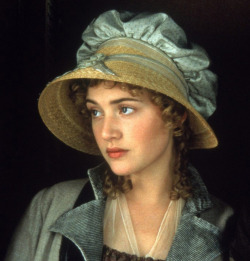
Kate Winslet as Marianne (1995)

Marianne may be Jane Austen's prettiest described heroine. (I'm talking about how Jane Austen wrote about her characters, not how we view them.) Elizabeth is supposedly much plainer than her sister Jane; Fanny is most definitely un-striking (though sweet); Anne Elliot has passed her bloom; Emma Woodhouse is described as handsome, but not many particulars are given; and Elinor, Marianne's sister, pales beside her exuberant younger sister. And Catherine Morland is supposed to be "girlish" and "sweet" but we don't really know how pretty she is. Sir John Middleton frequently describes Marianne as a "monstrous pretty girl". Sir John's use of adjectives is probably not the most appropriate in the world (how many pretty monsters have you seen?) but we get the idea.


Charity Wakefield as Marianne (2008)

Marianne's impulsiveness, though endearing, doesn't serve her well. She gets swept up in her exuberant feelings and often doesn't stop to think; and when John Willoughby comes on the scene, she falls for him like a ton of bricks. (That's an overused cliche, but at the moment I can't think of anything better.) Willoughby is charming, handsome and pleasant, and he reads poetry with great expression. On the surface, he seems to be the perfect one for Marianne. Until, of course, she discovers his true character.


Greg Wise and Kate Winslet as Willoughby and Marianne (1995)

Then there's Colonel Brandon, who's in love with Marianne but doesn't say anything about it because he thinks he's too old for her. He's more concerned with her happiness than with his own. And Marianne, though she likes Colonel Brandon, thinks he's boring and unromantic. She firmly believes in love at first sight, heroes on white horses and the undying love of Romeo and Juliet. (Romeo and Juliet? Ewwww.)

I think S&S has a running theme of "appearances can be deceiving". Obviously Willoughby is not what he seems. Nor is Colonel Brandon--he's ultimately the hero. Edward Ferrars really isn't the shy, stuttering person that Marianne condemns for a lack of feeling. Lucy Steele is most certainly not sweet and charming. (I have to say, though, that I liked her at first. Well, I did. How was I to know how awful she really was? I honestly thought she was just confiding in Elinor, not gloating.)


Charity Wakefield and Hattie Morahan as Marianne and Elinor (2008)

It's Marianne, though, that I'm talking about here. Marianne is impulsive and idealistic, naive and exuberant, governed by her emotions, seemingly a little shallow. But by the end of the book, the reader realizes that Marianne isn't quite what she seems. She's not shallow or flighty; she has a depth of perception that developed over the course of the novel. At first she didn't think twice about Colonel Brandon, but by the time the story ends, she appreciates him for who and what he is. Maybe the Colonel's not the dashing prince she dreamed of, but in the end he is the hero (and Willoughby's the bad guy). Character wins out over charisma.

I love this (unfortunately very short) scene of Marianne and Colonel Brandon--I only wish the movie showed more of their developing relationship. Marianne is finally beginning to realize that her true hero was there all along... and the Shakespeare sonnets make it 10x more romantic, of course. :)


Marianne is eager in everything, as Jane Austen says, and that includes eagerness to learn. And that's what she does: she learns from Colonel Brandon, from Elinor, from Edward, and even from Willoughby himself. She grows and matures throughout Sense and Sensibility--and in the end, the title fits her perfectly. She's acquired some sense, but she hasn't lost her sensibilities. She's toned down a little, but she's still Marianne.


Kate Winslet as Marianne in one of the best weddings ever (1995)

And really... if she weren't, the book might not be worth reading.